
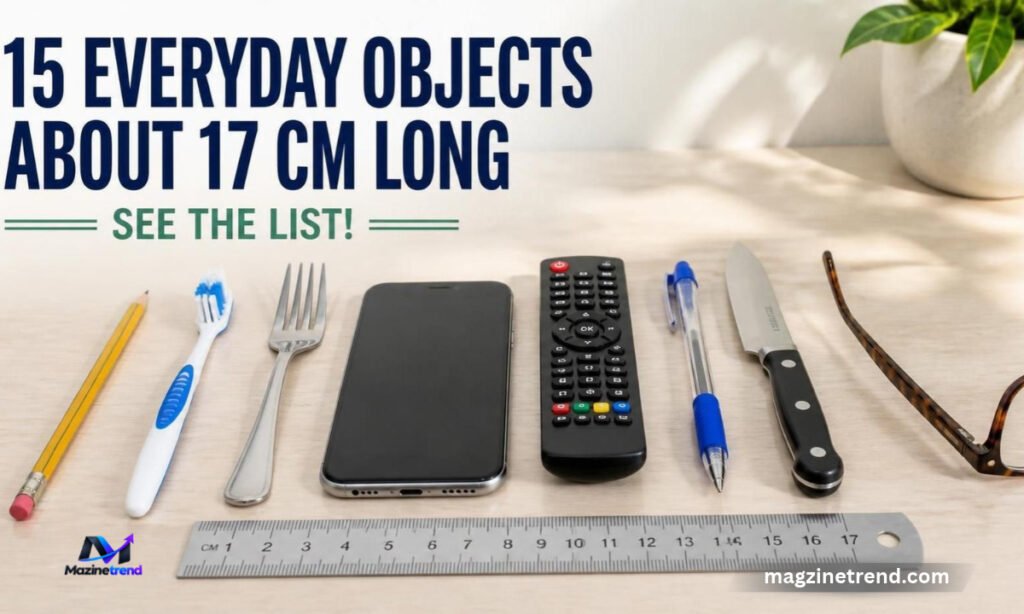
You read a product listing that says “17 cm long,” and your brain goes blank. Is that small? Will it fit in your bag? Will it fit in a drawer? Numbers on a screen are hard to picture, especially when you don’t have a ruler nearby.
Here is the quick answer. 17 cm equals 6.69 inches, which is a little less than 7 inches. It is about the length of a new pencil that has been sharpened a few times, or two credit cards placed end to end.
Below, you’ll find 15 everyday objects close to this size, simple ways to measure without a ruler, and answers to the questions people ask most.
How Big Is 17 cm? = 6.69 Inches
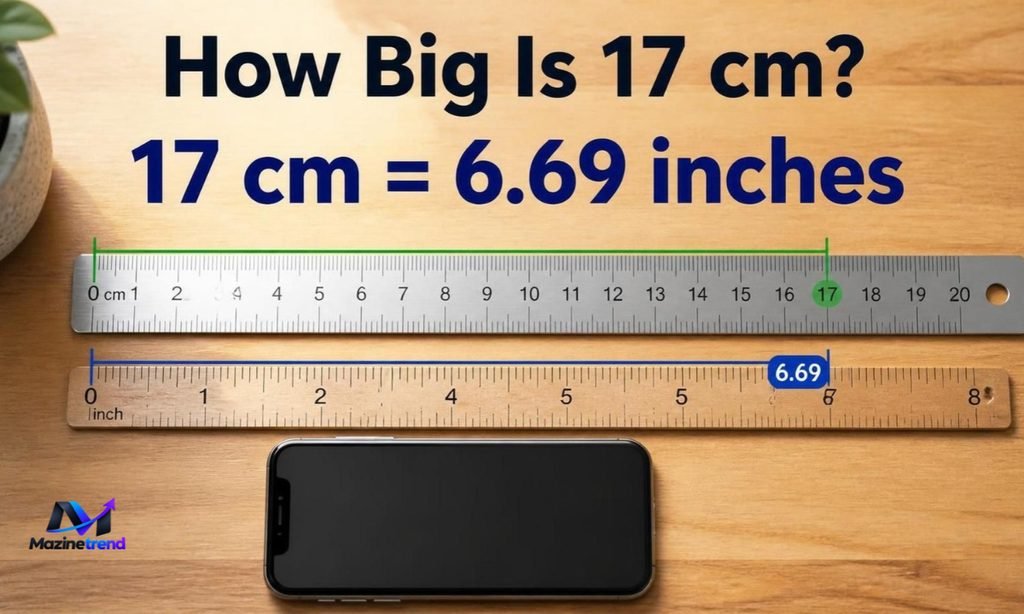
17 centimeters equals 6.69 inches. To convert, divide the number of centimeters by 2.54, because one inch is exactly 2.54 cm.
17 ÷ 2.54 = 6.69 inches (rounded to two decimals)
If you think in feet and inches, 6.69 inches is about 6 and 11/16 inches. That is roughly half a foot. A full foot is 30.48 cm, so 17 cm is a little over half of that.
In plain words, 17 cm is longer than your palm is wide but shorter than a standard school ruler. It is a “medium-small” length. You can hold it easily in one hand.
You May Also Like:Standard Pokémon Card Size: Discover the Exact Dimensions
17 cm in Different Units
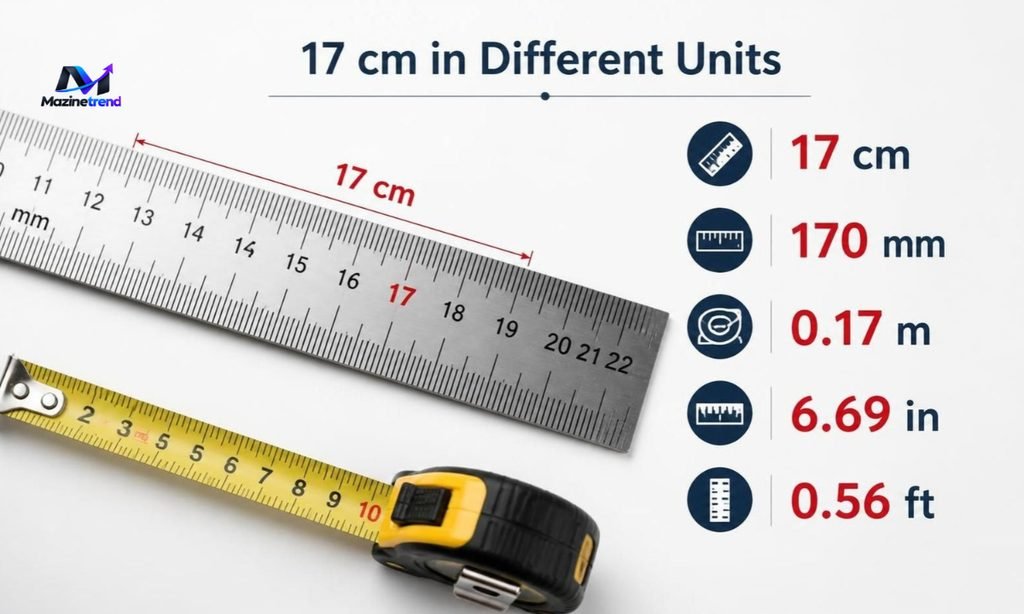
Different projects ask for different units. Here is a quick table you can save.
| Unit | Value for 17 cm |
| Millimeters | 170 mm |
| Meters | 0.17 m |
| Inches | 6.69 in |
| Feet | 0.558 ft |
| Yards | 0.186 yd |
A few quick notes:
- 17 cm in millimeters: multiply by 10, so 17 cm = 170 mm.
- 17 cm in meters: divide by 100, so 17 cm = 0.17 m.
- 170 mm to inches: divide 170 by 25.4, which gives 6.69 inches. Same answer, different starting point.
If you shop on both US and UK sites, this table saves a lot of guessing. UK listings often show both centimeters and inches. US listings usually show inches only.
What Does 17 cm Look Like?
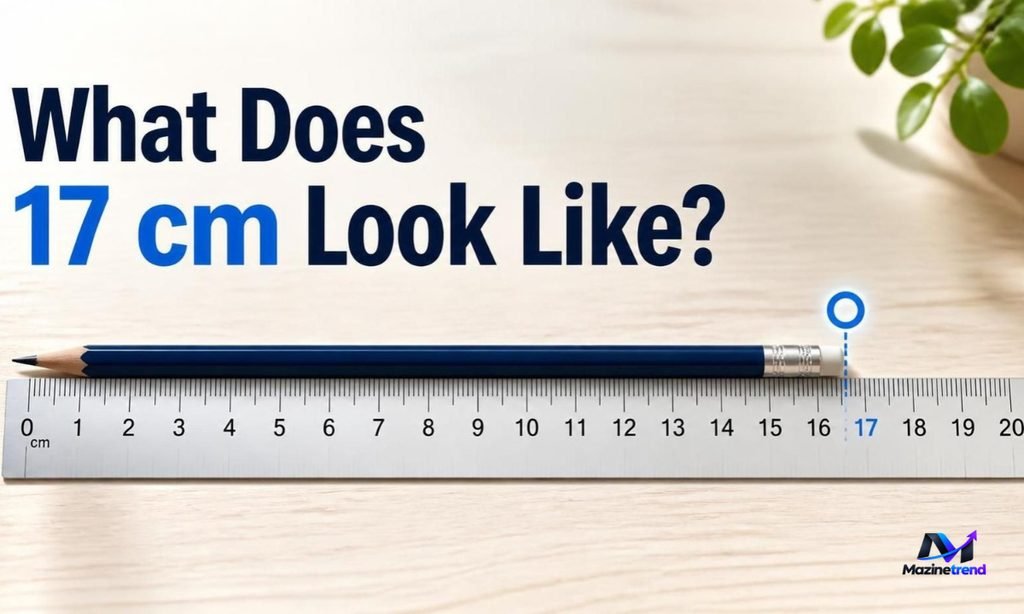
Picture a standard pencil that has been used for a few weeks. Or picture a TV remote with a short, slim body. Both land close to 17 cm.
Another trick: a standard credit or debit card is 8.56 cm long. Put two side by side and you get 17.12 cm, which is very close to 17 cm. Most people have a card in their pocket right now, so this is the easiest visual to remember.
You can also think of 17 cm as slightly longer than a typical adult’s hand from the wrist crease to the tip of the middle finger. Hand sizes vary a lot, so treat this as a rough guide only.
How Big Is 17cm?
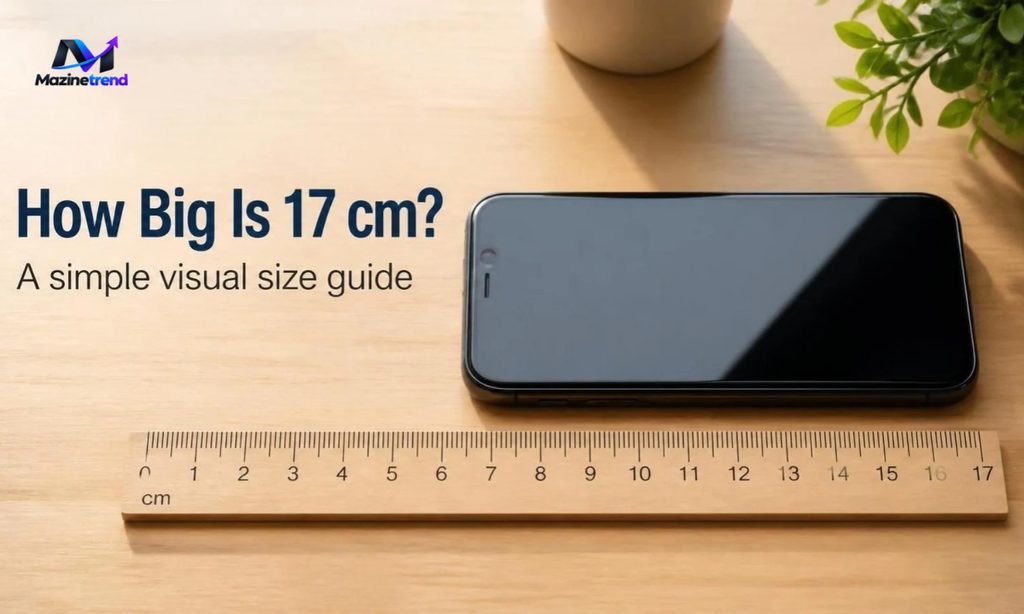
If someone asks “how big is 17cm” in a shop or on a forum, the honest answer depends on what they are measuring. For a kitchen tool, 17 cm is a short handle. For a phone, it would be a big screen (the whole device, that is, since most phones are shorter). For a bookshelf, it is a thin paperback.
So 17 cm is not big or small on its own. It is a size that feels handy. It fits in a jacket pocket, a kitchen drawer, or a small pouch.
Why Understanding 17 cm Matters

Imagine you order a “17 cm” shoe horn online, and it arrives looking like a toy. Or you buy a 17 cm drawer organizer and find it is too short for your pens. Small mistakes like these waste money and time.
Knowing what 17 cm looks like helps you:
- Check if an item will fit in a drawer, bag, or glove box
- Read product listings with confidence
- Spot a wrong Measurement before you buy
- Do quick DIY jobs without hunting for a tape measure
It also helps when you are teaching kids about length. A child who can picture 17 cm with a real object remembers it far longer than one who only reads the number.
Why Everyday Comparisons Make Learning Easier

Our brains remember things we can touch and see. A number like “170 mm” means little. A comparison like “about as long as a spatula handle” sticks.
This is why teachers use real objects when they explain length. It is also why designers sketch next to a coin or a hand. A comparison turns an abstract number into something you already know.
You do not need to memorize all 15 objects below. Pick two or three you own and keep them in mind. That is enough to estimate 17 cm in most situations.
Where Is 17 cm Commonly Used?
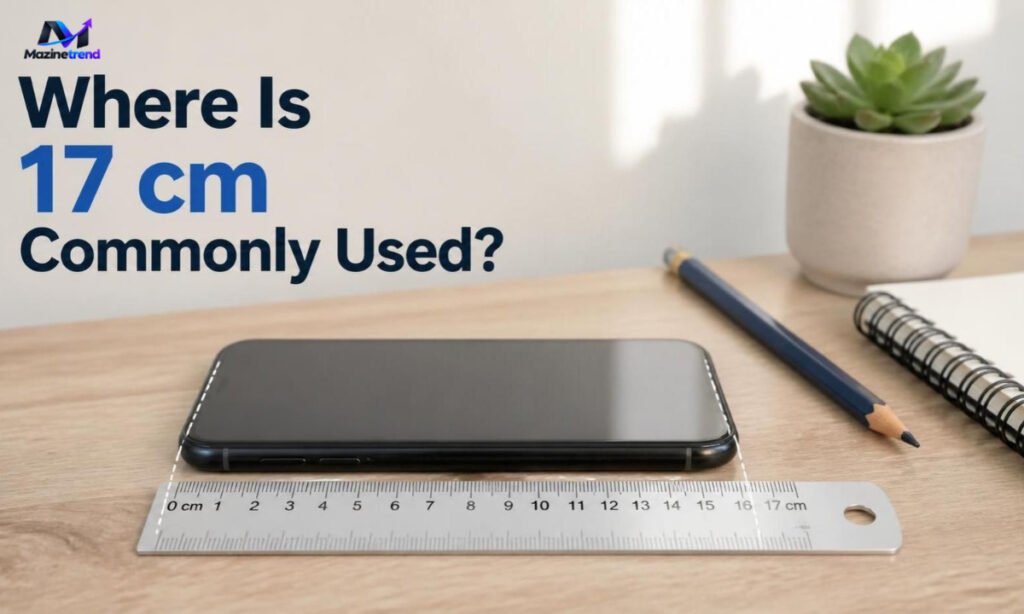
You will run into this length more often than you think:
- Kitchen tools: spatulas, peelers, small spoons
- Personal care: toothbrushes, hairbrushes, shoe horns
- Electronics and gadgets: remotes, small flashlights
- School and office: rulers, desk trays, notebooks
- Home projects: paint roller handles, small tools
It is a popular length because it suits the human hand. Anything you grip, tilt, or carry in one hand tends to land between 15 and 20 cm.
How Big Is 17 Centimeters?
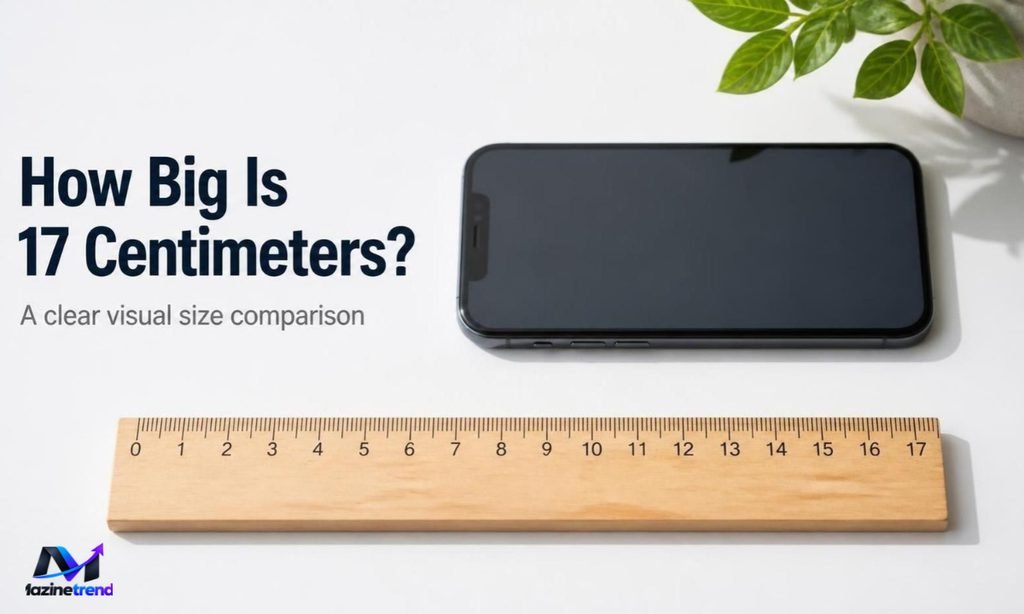
Put simply, 17 centimeters is about 6.7 inches, 170 millimeters, or 0.17 meters. It is shorter than a sheet of A4 paper’s width (21 cm) and longer than a US dollar bill (15.6 cm).
So if you have a dollar bill, you are already close. Add about 1.4 cm and you have 17 cm.
15 Real-Life Examples of 17 cm (Simple & Daily Use)
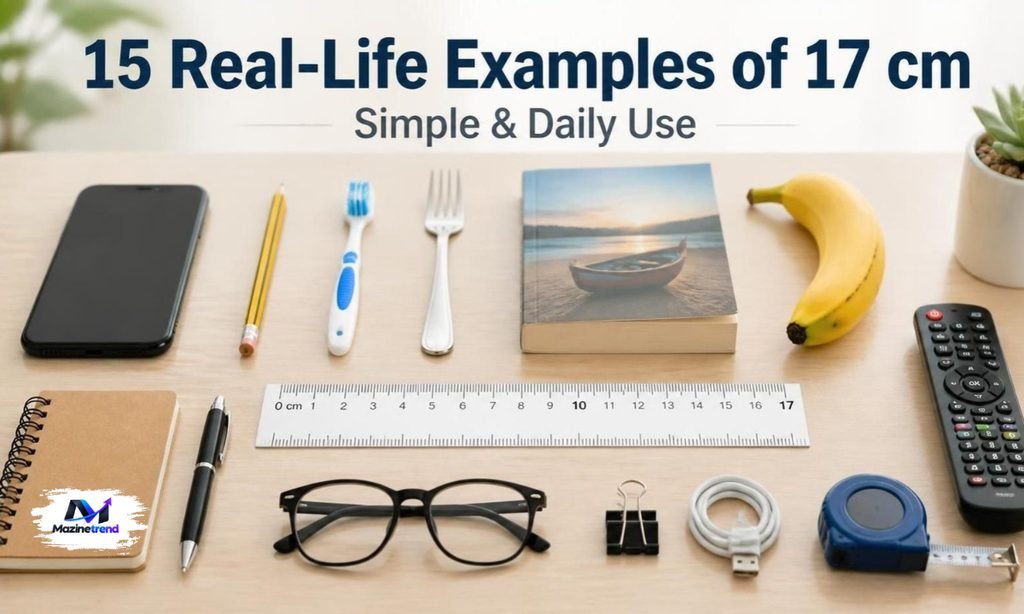
A quick note before the list: product sizes vary by brand. Every item below is “about” 17 cm, usually within a centimeter or two. If an exact size matters, measure your own item.
1. Standard Silicone Spatula
Many compact silicone spatulas, the kind that live in a kitchen drawer, are around 17 cm including the handle. Full-size ones are often longer, around 25 to 30 cm, so look for the “mini” or “small” version. These are great for scraping the last bit of jam from a jar.
2. Kitchen Vegetable Peeler
A basic swivel or Y-shaped peeler is often between 15 and 18 cm long. Hold yours next to your palm. If it reaches slightly past your fingertips, you are in the right zone. [Verify Fact: brands vary, so measure yours.]
3. Small Wooden Cooking Spoon
Small tasting spoons and mini wooden spoons usually measure 15 to 18 cm. They are handy for stirring spices, sauces, or a cup of tea. Larger cooking spoons run 30 cm or more, so this one is the “small” cousin.
4. Compact Shoe Horn
Travel or pocket shoe horns are made short so they fit in a bag. Many sit near 17 cm. Long-handled shoe horns for standing use can reach 60 cm or more, so check the listing.
5. Hair Brush Handle
On many compact or travel hairbrushes, the handle alone measures about 17 cm. The full brush, with the head included, is often longer. When you measure, start at the base of the bristle head and stop at the end of the handle.
6. Compact TV Remote Control
Slim, simple remotes are often 15 to 19 cm long. That puts many of them right at 17 cm. If you have a basic streaming remote or a short TV remote, grab it now and you have a ready-made 17 cm reference. Full-size remotes with lots of buttons can be 20 cm or more.
7. Mini Reusable Water Bottle
Small bottles meant for kids or handbags, usually 250 to 350 ml, tend to stand around 17 cm tall. Bigger 500 ml bottles are often 20 to 24 cm. This is a good one to remember if you carry a bottle every day.
8. Hardcover Novel Height
Most standard hardcover novels are taller, around 20 to 24 cm. But small hardcovers, pocket editions, and many mass-market paperbacks are close to 17 cm tall. A common mass-market paperback size is about 4.25 by 6.87 inches, which is roughly 10.8 by 17.5 cm. [Verify Fact: sizes differ by publisher.]
9. Medium Kitchen Tongs
Small serving tongs, the kind used for salad or snacks, often measure 15 to 18 cm. Standard cooking tongs run 23 to 30 cm. If you want a size that fits in a small drawer, this is it.
10. Adult Toothbrush
An adult toothbrush is usually between 17 and 20 cm long, depending on the brand and handle shape. Many sit very close to the 17 to 18 cm range. Since you probably have one within arm’s reach, this is one of the easiest objects to test.
11. Small Flashlight
Pocket flashlights and keychain torches often measure 10 to 17 cm. The “medium pocket” size, with one or two AA batteries, is often close to 17 cm. It is a good fit for a glove box or a drawer by the bed.
12. Metal Ruler (Small Size)
Many small metal rulers are sold as 15 cm (6 inch) rulers. Others come as 20 cm (8 inch). A 17 cm length sits between them, so a 15 cm ruler plus a little extra is a good visual. If you own a standard 30 cm ruler, 17 cm falls just past the 15 cm mark.
13. Paint Roller Handle
Handles on mini or trim paint rollers are often about 15 to 18 cm long, not counting the roller. They are made short so you can reach tight spots like behind a toilet or along a window frame.
14. Kitchen Bread Knife Handle
A bread knife blade is long, often 20 to 25 cm. The handle alone, however, is often 11 to 14 cm. For the whole knife to be 17 cm, you would be looking at a small serrated or “tomato” knife. [Verify Fact: handle length varies a lot between brands, so this is a loose match.]
15. Desk Organizer Tray
Small desk trays for pens, clips, and sticky notes are commonly 15 to 20 cm long. A 17 cm tray fits a standard pen with room to spare. Check the inside length, because the outside edge adds a bit.
Why Manufacturers Prefer 17 cm

There is a good reason this size shows up so often. It matches how our hands work.
- Grip comfort: A handle around 10 to 12 cm fits inside the palm. Add a head, bristles, or blade, and the whole tool lands near 17 cm.
- Storage: 17 cm fits in most kitchen drawers, travel bags, and desk trays.
- Material cost: Shorter products use less plastic, wood, or metal, which keeps prices down.
- Shipping: Small items pack neatly into standard boxes.
In short, 17 cm is a comfortable size for people and an efficient size for factories.
17 cm Compared With Other Common Measurements
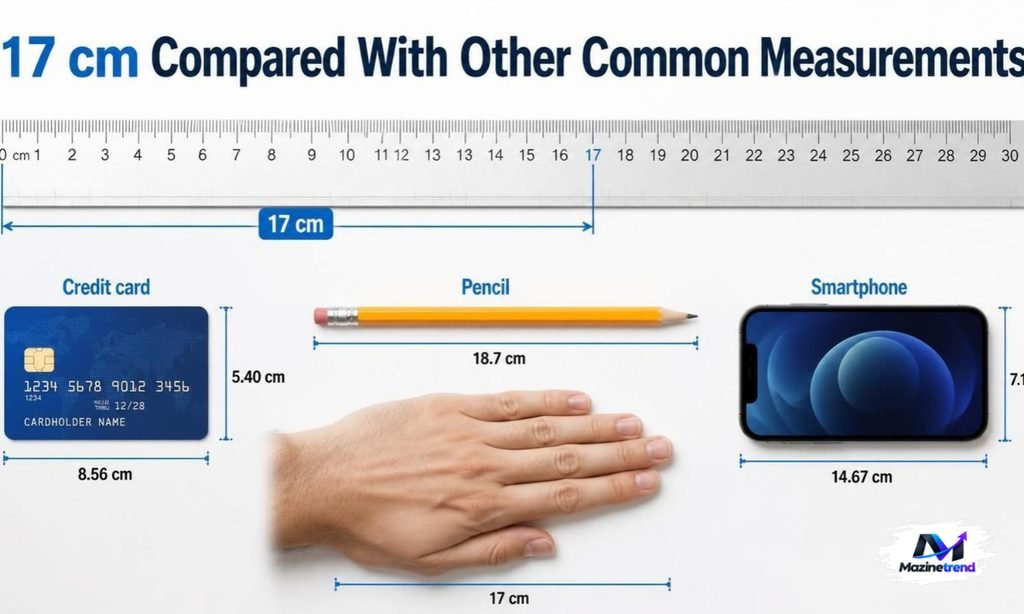
Here is how 17 cm stacks up against lengths you already know.
| Item | Approximate Length |
| Credit card | 8.56 cm |
| US dollar bill | 15.6 cm |
| Target length | 17 cm |
| A4 paper (short side) | 21 cm |
| Standard school ruler | 30 cm |
| Letter paper (long side) | 27.9 cm |
You can see that 17 cm is almost the same as a dollar bill with a little extra. It is also roughly half of a standard ruler.
What Does 17cm Look Like?
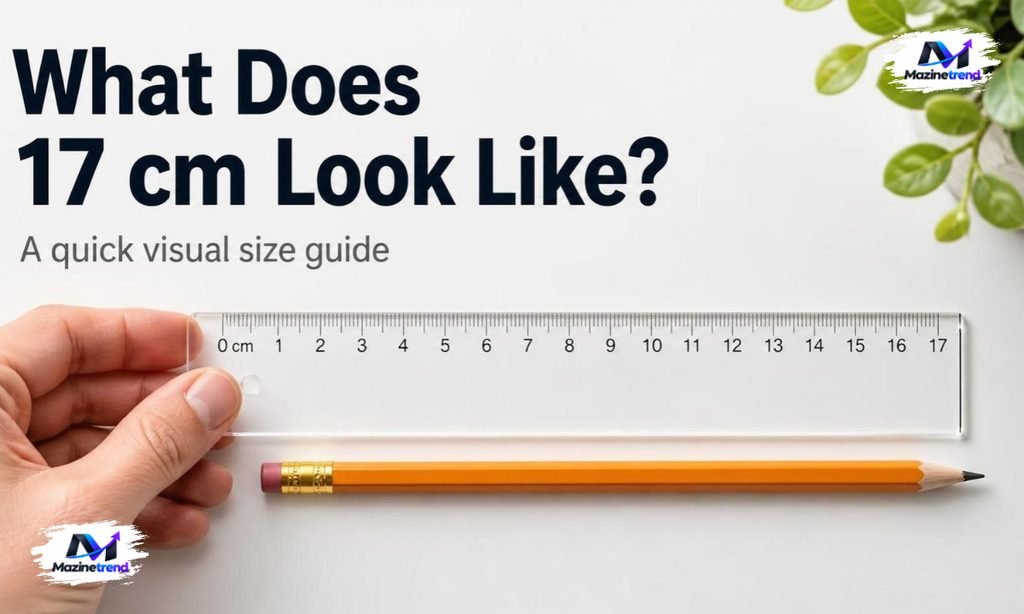
If you want one picture to carry in your head, use this: two credit cards laid end to end. That is 17.12 cm, which is off by only about a millimeter.
If you do not have cards, try a sharpened pencil. A brand-new pencil is about 19 cm. After a bit of use, it shrinks to around 17 cm. It is not exact, but it is close enough for most jobs.
17 cm in Daily Life
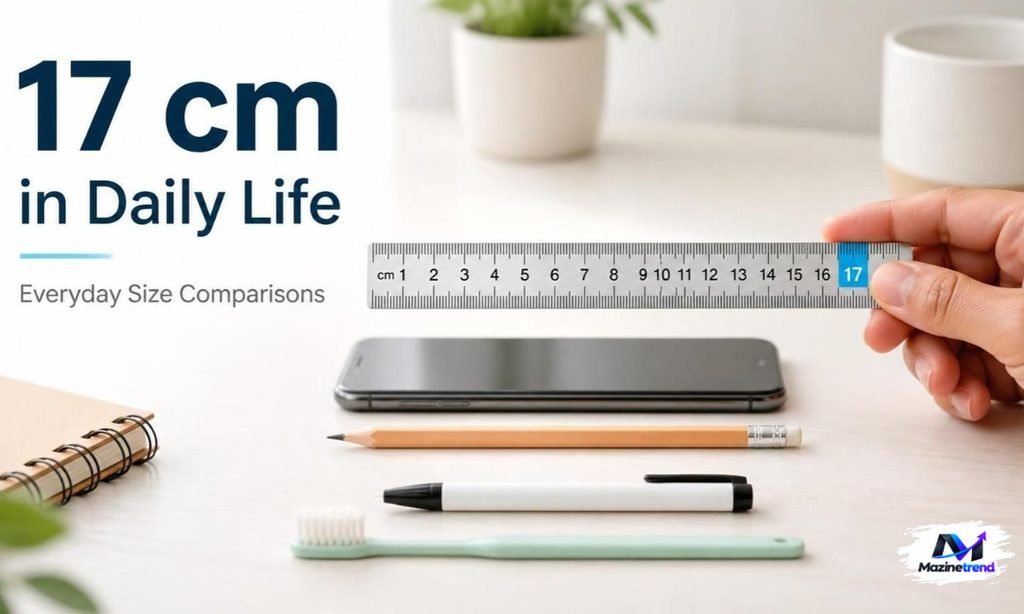
You use this length all the time without noticing:
- Brushing your teeth with a 17 to 19 cm toothbrush
- Grabbing a TV remote from the couch
- Peeling potatoes with a short peeler
- Slipping a small notebook into your bag
- Stirring sugar into tea with a small spoon
Once you notice it, you start seeing 17 cm everywhere. That makes it a very useful reference length.
How to Visualize 17 cm Without a Ruler

You do not always have a ruler handy. Here are five easy ways to measure 17 cm without one.
- Two credit cards: Place them end to end. Total: about 17.1 cm.
- A dollar bill plus a little: A US dollar bill is 15.6 cm. Add roughly the width of your thumb.
- A used pencil: A new pencil is about 19 cm. Once it is a little shorter, it is close to 17 cm.
- Your own hand: Measure the distance from your wrist crease to your middle fingertip once with a ruler. If it is near 17 cm, you have a handy tool for life.
- A phone and a card: Many phones are 14 to 16 cm tall. Check yours against a ruler once, then use it as your guide. [Verify Fact: depends on model.]
The hand trick works best when you check it just one time with a real ruler. After that, you carry a measuring tool everywhere.
Common Mistakes When Estimating 17 cm
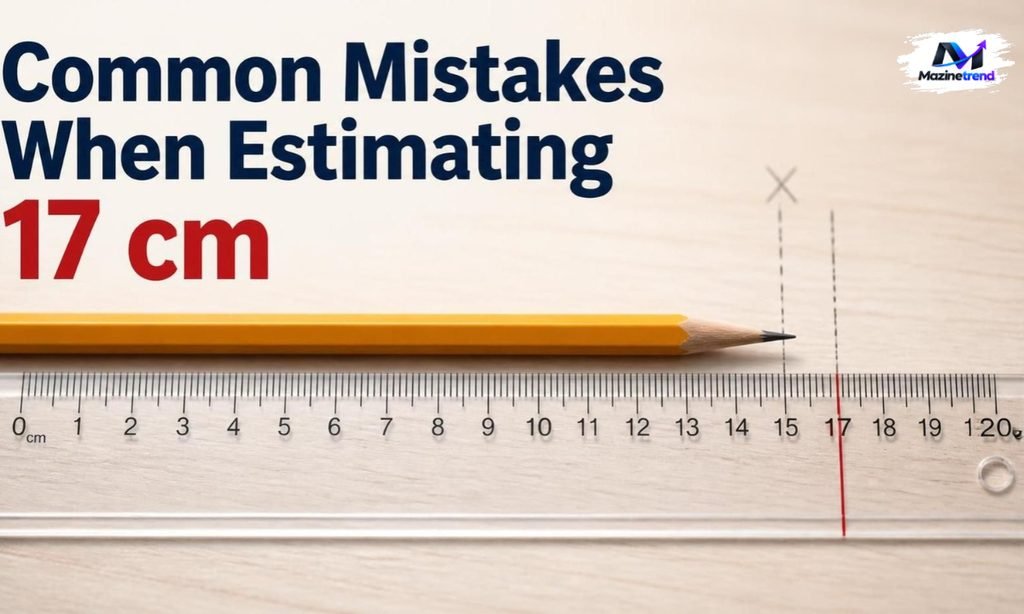
Even careful people make these errors:
- Mixing up cm and mm: 17 cm is 170 mm, not 17 mm. A 17 mm object is smaller than a paperclip.
- Mixing up cm and inches: 17 inches is 43.18 cm. That is much bigger than 17 cm.
- Measuring from the wrong point: Rulers often have a small blank edge before the zero mark. Line up the zero, not the edge.
- Trusting memory: People tend to overestimate lengths. Hold the object next to a known reference.
- Ignoring product variation: Two “17 cm” items from different brands can differ by a centimeter or more.
If a fit really matters, such as a shelf or a case, measure the actual item.
17 cm Compared to Other Measurements
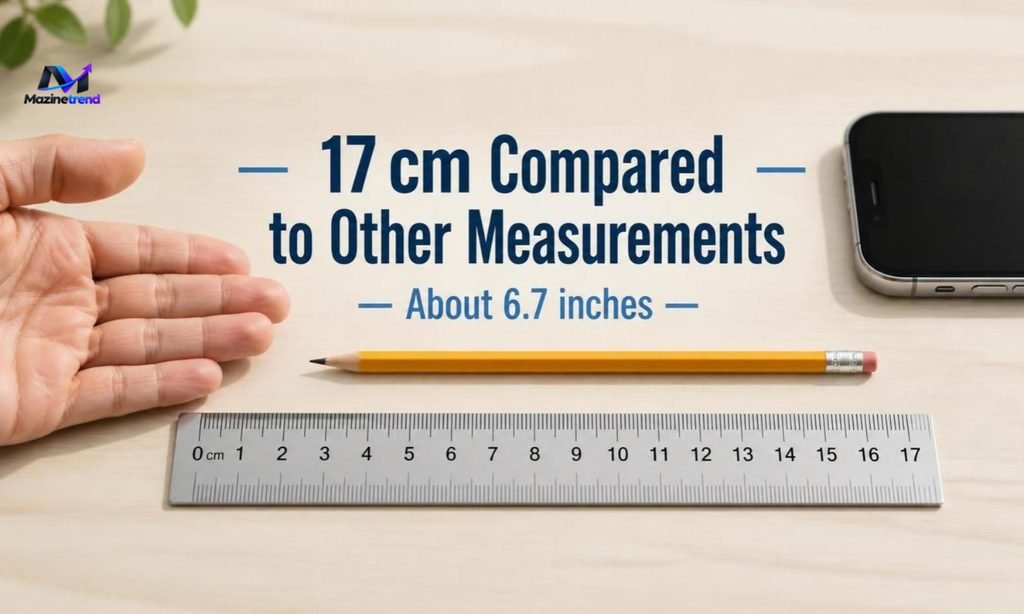
Sometimes you need to jump between nearby sizes. This list helps:
- 15 cm = 5.91 inches
- 16 cm = 6.30 inches
- 17 cm = 6.69 inches
- 18 cm = 7.09 inches
- 20 cm = 7.87 inches
Each centimeter adds about 0.39 inches. So when a listing says 18 cm and you want 17 cm, you are off by just under half an inch.
How 17 cm Is Used in Product Design
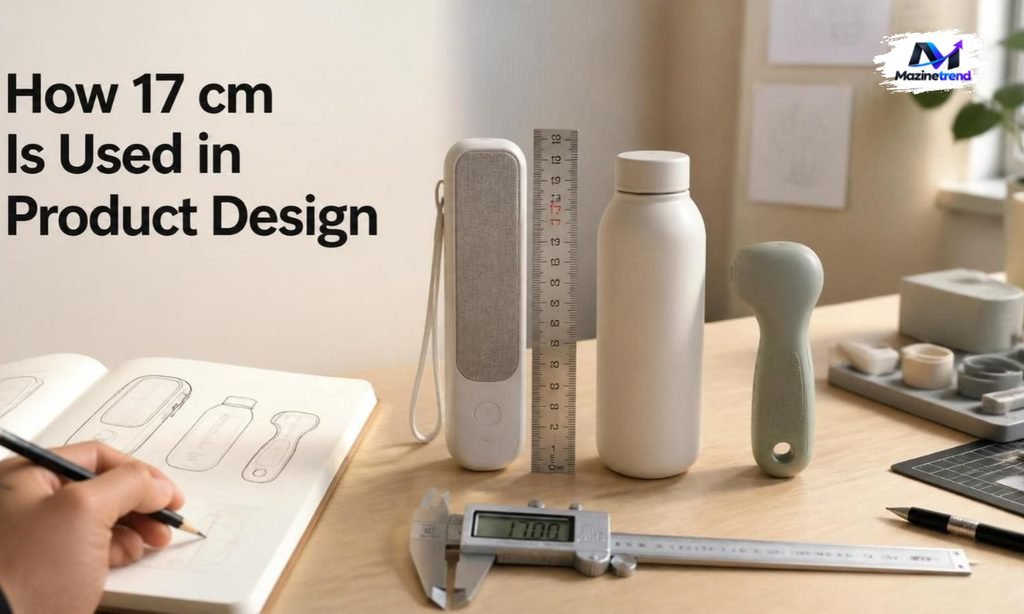
Designers often start from the human hand. An average adult hand is around 17 to 19 cm long from wrist to fingertip. [Verify Fact: ranges vary by age, sex, and region.] Tools meant for one hand are often built close to this size.
That is why so many items cluster near 17 cm:
- Handheld devices fit between the palm and fingertips
- Grips can be held without strain
- Items slide into pockets and pouches
- Packaging stays compact
When a product feels “just right” in your hand, there is a good chance its length is close to 17 cm.
Importance of Accurate Measurement
Small errors add up. A 1 cm mistake does not seem like much, but it can mean a case that will not close or a shelf that will not fit.
Accuracy matters most in these situations:
- Buying furniture or storage: Always check inside dimensions.
- Sewing and crafts: A few millimeters can ruin a pattern.
- DIY and repairs: Parts that are 2 to 3 mm off may not fit at all.
- Shipping: Many carriers charge by box size.
When it counts, use a metal ruler or a steel tape measure, not a plastic ruler that has bent over time.
17 cm Comparison
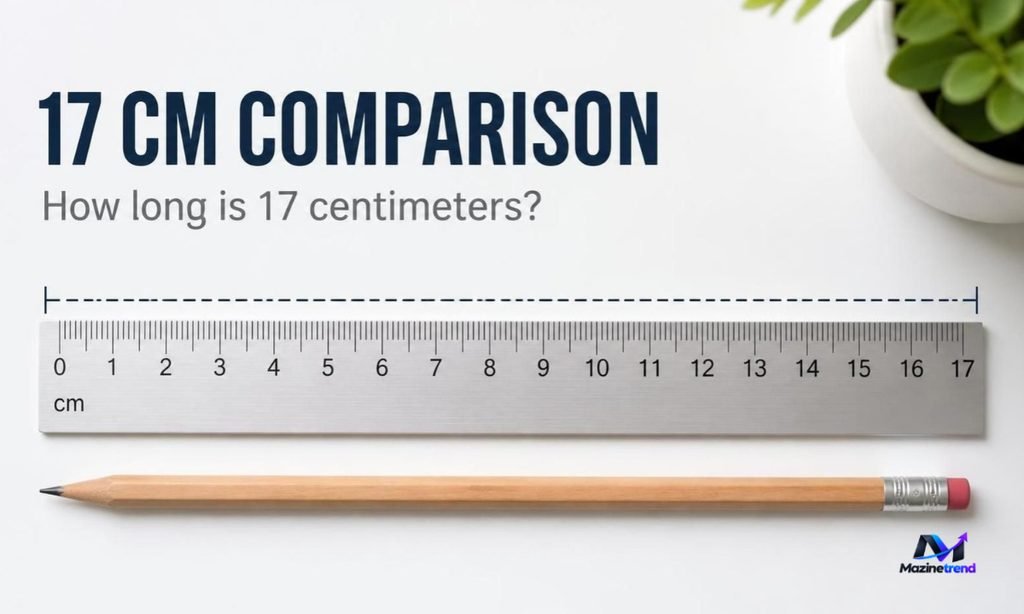
Here is a final side-by-side that you can screenshot:
| Reference | Compared to 17 cm |
| Two credit cards | Almost identical (17.12 cm) |
| US dollar bill | About 1.4 cm shorter |
| New pencil | About 2 cm longer |
| A4 paper (short side) | About 4 cm longer |
| Standard 30 cm ruler | About 13 cm shorter |
Improving Your Measurement Skills

Estimating gets better with practice. Try these habits:
- Guess first, then check. Look at an item, guess its length, then measure. Do this ten times and your accuracy jumps.
- Memorize two or three anchors. Use a credit card (8.56 cm), a dollar bill (15.6 cm), and A4 paper (21 cm).
- Use a good tool. A 30 cm steel ruler or a 5 meter tape measure is enough for most homes.
- Measure your own body parts once. Your hand span, thumb width, and foot length can all serve as handy references.
Within a week or two, you will be able to eyeball 17 cm quite well.
FAQs
Is 17 cm a large size?
No. 17 cm (6.69 inches) is a small to medium length. It fits easily in one hand and is shorter than a standard ruler. For a kitchen tool or a gadget, it is a handy, compact size. For furniture or luggage, it would be tiny.
How large is 17 cm?
17 cm is 170 millimeters, 0.17 meters, or about 6.69 inches. It is a little over half a foot. Two credit cards end to end are almost exactly this length.
What does 17 cm look like?
Think of a TV remote with a short body, an adult toothbrush, or a pencil that has been sharpened a few times. A US dollar bill plus a thumb’s width also gets you close. For the most reliable visual, line up two bank cards.
Is 16 cm big for a guy?
This question usually refers to body measurements, so here is a plain answer. Large studies put the average erect length at about 13 cm (5.1 inches). That makes 16 cm (6.3 inches) above average. Still, size has little to do with satisfaction or health, and most people worry about it more than they need to. If you have a medical concern, a doctor is the best person to ask. [Verify Fact: averages vary slightly between studies.]
Conclusion
17 cm is easy to picture once you link it to things you already own. Remember the simple facts: it is 6.69 inches, 170 mm, or 0.17 m. Remember the best shortcut: two credit cards, end to end.
Next time you see a “17 cm” listing, grab a card, a toothbrush, or a remote and check the size yourself. Got a favorite 17 cm object that I missed? Share it in the comments so other readers can use it too.

Smith Oxford is the administrator of MagzineTrend, bringing over five years of SEO experience to the website. He oversees content quality, search optimization, and site updates, helping readers discover practical measurement guides and engaging celebrity features.


Pingback: 15 Everyday Things That Are About 7 Inches Long – Discover!
Pingback: How Heavy Is 40 kg? Discover 11 Everyday Examples